
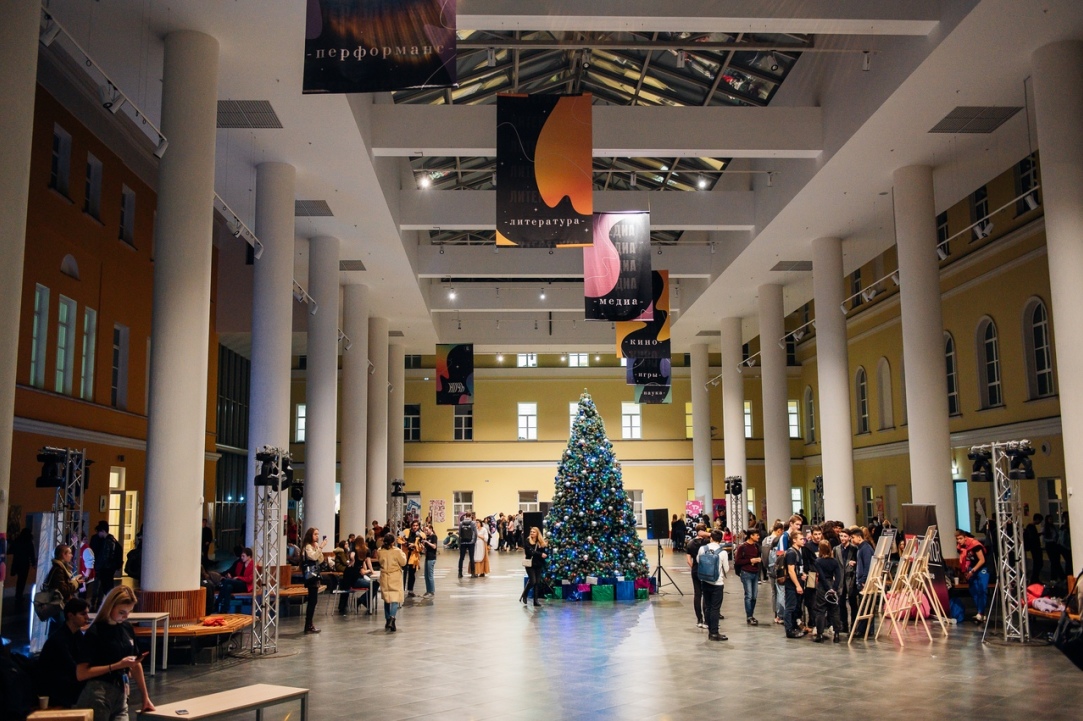
'Night' Talk about Science
HSE University hosted its long-awaited student festival ‘Night’ at its building on 11 Pokrovsky Boulevard Thursday. Featuring 12 hours of lectures, games, master classes, music, and conversation. It was a night no students, lecturers or guests had any time for sleep. Ekaterina Streltsova, Senior Research Fellow at HSE ISSEK, participated in the Research Fail Night session, where she talked about how she was nearly kicked out of the supermarket during a social experiment, and then held a series of individual consultations in the format of Science Dating.

HSE University Develops Science, Technology and Innovation Foresight for South Africa
On December 4, a forum on developments in science, technology and innovation (STI) was held in Pretoria, South Africa. There, a 10-year development plan was presented, based on an S&T foresight commissioned by the South African government and developed by the HSE Institute for Statistical Studies and Economics of Knowledge.
Leonid Gokhberg: ‘Almost Every Fifth High-Tech Russian Company Uses Additive Technologies’
Additive technologies including 3D-printing are growing faster than 75% of other relevant digital technology areas, noted Leonid Gokhberg, HSE First Vice-Rector and ISSEK Director, at the forum ‘Additive Technologies, Growing Horizons’ hosted by the Skolkovo Institute of Science and Technology (Skoltech) on 3 December 2019.
The Results of a Study of Russian Entrepreneurs’ Digital Activity Were Discussed at a Joint EC/OECD Workshop
Experts from the ISSEK Centre for Business Tendencies Studies (CBTS) presented the results of a pilot project to measure digital activity of Russian industrial and retail companies at the 9th Joint EC/OECD Workshop (14-15 November 2019, Paris, France).
“To solve the everyday people’s problems”: Seminar in Yandex
On October 19, 2019, a seminar was organised at Yandex as part of the Mikhail Gershman’s course “Managing Creativity and Innovation”. It was led by Ekaterina Shor, Senior Key Accounts Development Manager, graduate of the Master’s Programme “Governance of Science, Technology and Innovation”.
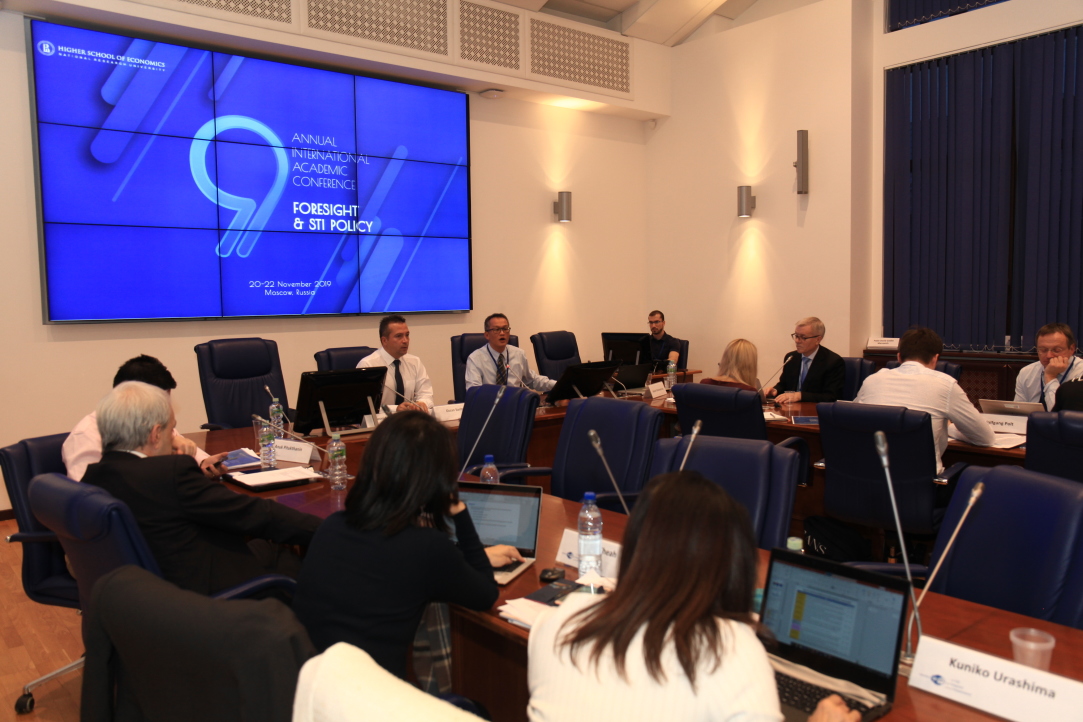
HSE University Hosts ‘Foresight and STI Policy’ Conference
From November 20-22, the HSE Institute for Statistical Studies and Economics of Knowledge and the International Research and Educational Foresight Centre hosted the Foresight and STI Policy Conference. At the event, HSE specialists presented their latest research in science, technology and innovation policy, long-term science foresight, and global trend monitoring.
Defining Digital Economy Boundaries
Being cross-cutting in nature, digital technologies permeate all spheres of life and all industries. Evaluating their effects and the contribution to production and social development comes to the forefront of national statistical services’ agenda, along with developing new tools and methods to measure this domain. On 15 November Leonid Gokhberg, HSE First Vice-Rector and ISSEK Director, spoke about the HSE Institute for Statistical Studies and Economics of Knowledge’s approaches to identifying the boundaries, and assessing the effects of digital economy at the panel discussion ‘Measuring the Digital Economy’ in the scope of the Rosstat conference.
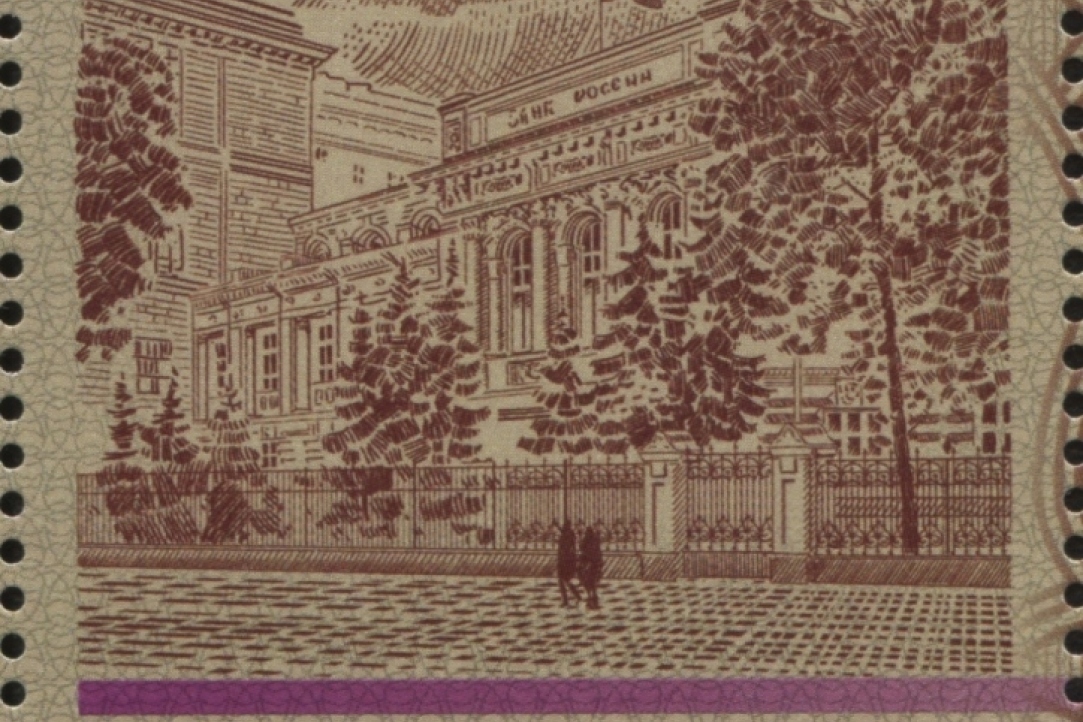
Efficient, but Not without Help
Veronika Belousova, Alexander Karminsky, and Ilya Kozyr analyzed what banks performed best on the Russian market from 2004 to 2015 - state, private, or foreign-owned ones. They found out that during stable economic and political periods, foreign-owned banks tend to take the lead, while during a crisis period, such as from 2008 to 2013, state-owned banks outperformed them. The article was published in the Emerging Markets Finance and Trade journal.
Russia Is among the World’s Top 10 Producers and Users of Spatial Data
Forecasting the economy’s demand for spatial data, remote sensing data, and geoinformation technologies is one of the key objectives of the study being conducted by HSE experts jointly with the Aerospace Research Institute, commissioned by Rosreestr. A public discussion of the interim results was held on 7 November at the conference ‘Spatial Data for the Digital Economy and Sustainable Development of the Russian Federation’.

Russia’s Tech Hubs
What are Russia’s ‘Technocities’ Producing? Ekaterina Streltsova and Gleb Kuzmin, researchers from the HSE Institute for Statistical Studies and Economics of Knowledge (ISSEK), studied patent data from 2008 to 2016 and compiled a ranking of Russian cities by number of pending invention patents.